Объединение рук с Бразилией для беспроигрышного будущего: расширение возможностей высококачественной глобализации пестицидной промышленности Китая-13-я Международная конференция по развитию торговли продуктами для защиты растений успешно проведена
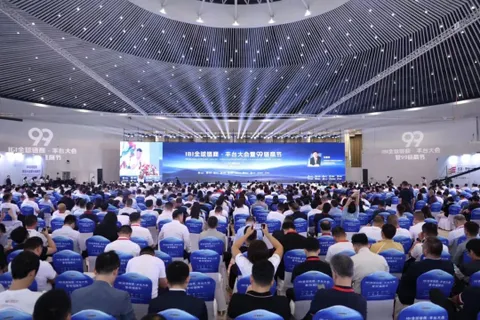
From June 24 to 25, 2026, the 13th International Trade Development Conference for Plant Protection Products, hosted by the China Crop Protection Industry Association and organized by its International Trade Working Committee, was successfully held in Qingdao, Shandong.Leaders and guests from the Institute for the Control of Agrochemicals, Ministry of Agriculture and Rural Affairs; the Shandong Institute for the Control of Agrochemicals; Brazil’s Ministry of Agriculture, Livestock and Food Supply; and the Brazilian Health Regulatory Agency, together with more than 20 representatives from Brazilian associations and enterprises, including the Brazilian Confederation of Agriculture and Livestock, the Brazilian Institute for Regulation and Sustainable Development, the Brazilian Crop Protection Products Industry Alliance, and more than ten well-known Brazilian agrochemical companies, gathered with over 400 industry professionals from across China.Participants focused on in-depth China-Brazil agricultural cooperation, pesticide industry management policies and compliance supervision, the development status of Brazil’s agrochemical market, and other key topics, jointly analyzing industry trends, opportunities and challenges.
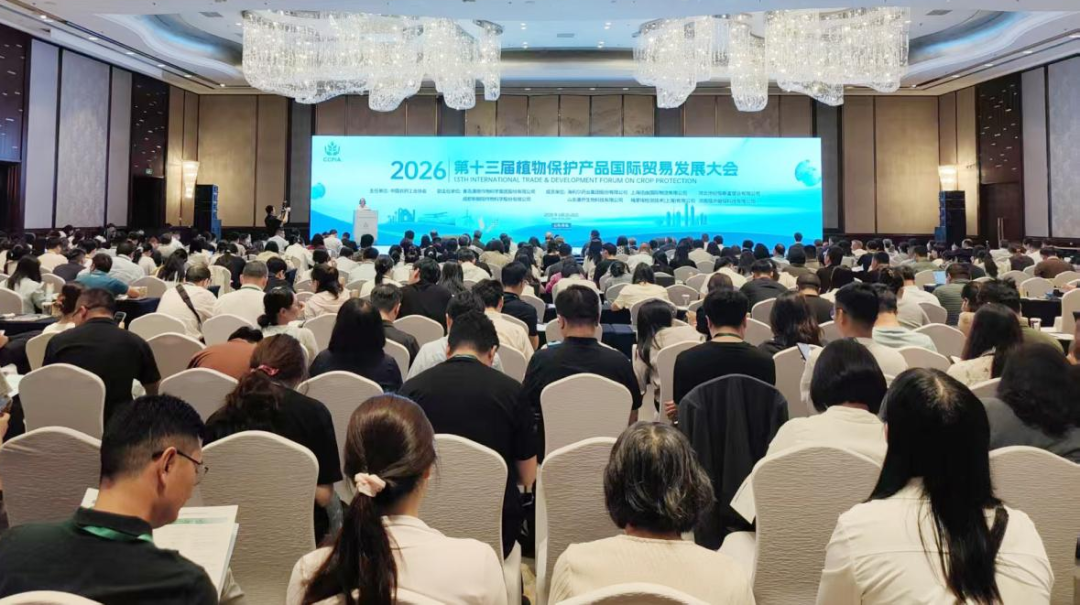
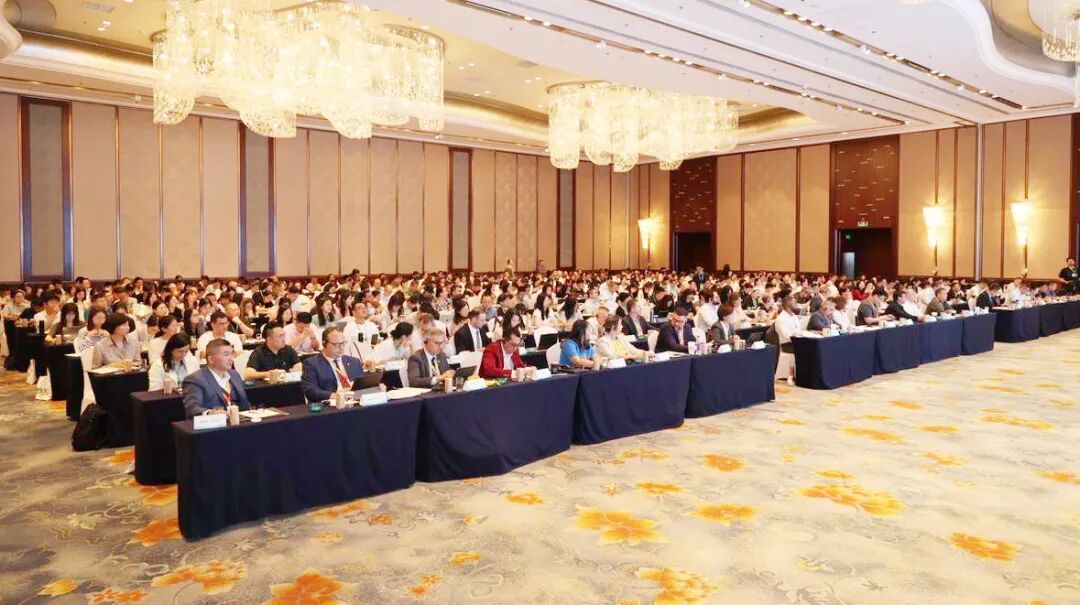
Zhao Keli, Deputy Party Secretary and Secretary of the Discipline Inspection Commission of the Institute for the Control of Agrochemicals, Ministry of Agriculture and Rural Affairs, noted in his speech that since 2013, the pesticide authorities of China and Brazil have continued to carry out in-depth, practical and fruitful exchanges and cooperation. In 2024, bilateral cooperation in the pesticide sector entered a new stage of development. The visit of the Brazilian delegation to China will strongly promote the entry of more high-quality Chinese pesticide products into the Brazilian market and help pesticide trade between the two countries achieve high-quality development.
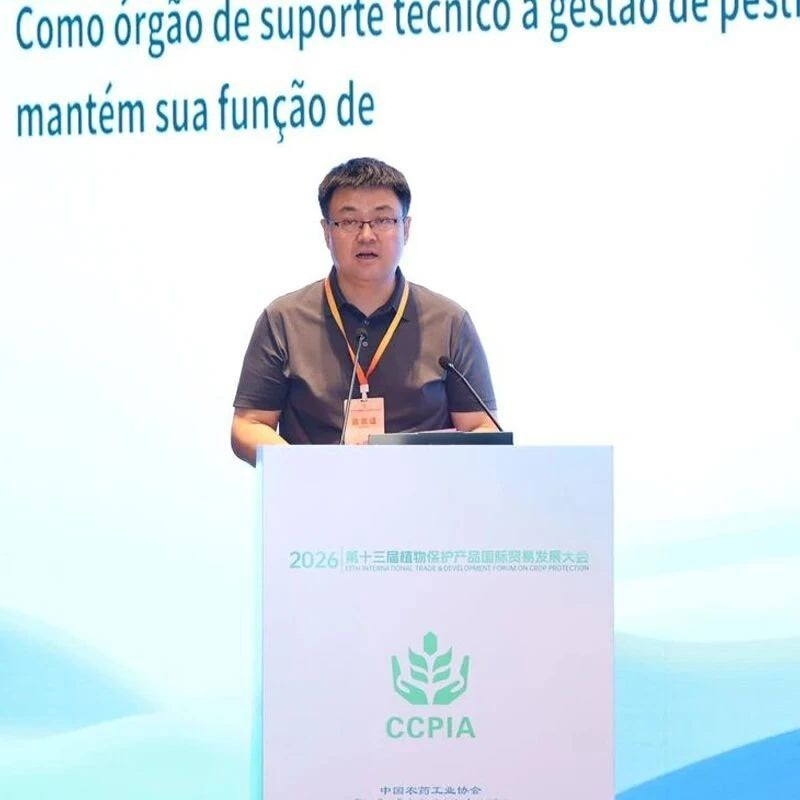
Zhao Keli
- Deputy Party Secretary and Secretary of the Discipline Inspection Commission
- Institute for the Control of Agrochemicals, Ministry of Agriculture and Rural Affairs
Zhang Yaozhong, Director of the Shandong Institute for the Control of Agrochemicals, said in his speech that Shandong’s pesticide industry has shown strong development momentum, with the number of innovative pesticide enterprises in the province accounting for nearly half of the national total. Leading enterprises in the industry have continued to expand in international markets, and their independently developed pesticide technical materials and formulations are well recognized globally.
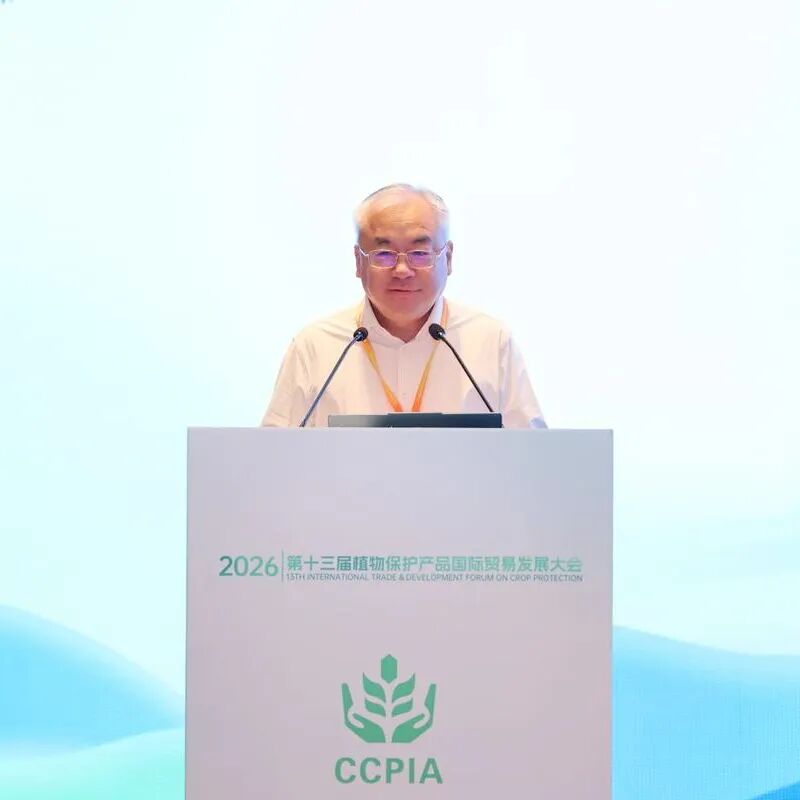
Zhang Yaozhong
- Director of Shandong Institute for the Control of Agrochemicals
Edilene Soares, Director of the Department of Agricultural Inputs at Brazil’s Ministry of Agriculture, Livestock and Food Supply, said in her speech that Brazil is willing to continue deepening long-term agricultural exchanges and cooperation with China, jointly respond to climate challenges, and develop sustainable agriculture. This visit to China will further consolidate the foundation of bilateral cooperation and expand new areas for collaboration.
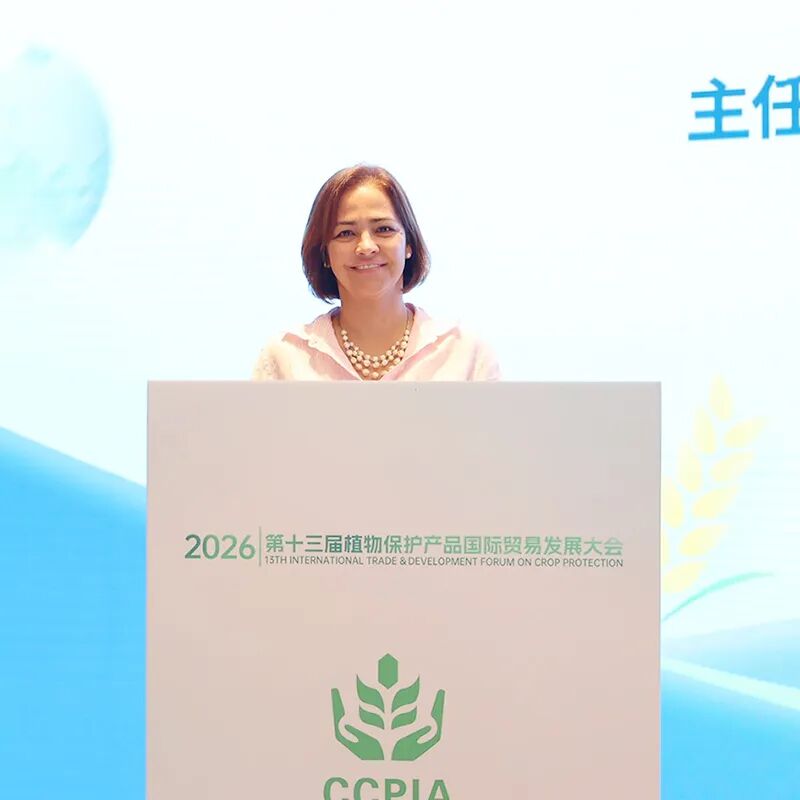
Edilene Soares
- Director of the Department of Agricultural Inputs, Ministry of Agriculture, Livestock and Supply of Brazil
Compared with the 13th Five-Year Plan period, China’s pesticide exports during the 14th Five-Year Plan period have achieved growth in both volume and value, with significant changes in the industry’s trade landscape. Yan Duanxiang, President of the China Crop Protection Industry Association, shared three key observations: first, the next five to ten years will be a critical stage for the development of China’s pesticide industry, and independent brand building will be at the core of industrial development; second, the modernization of the pesticide industry should be coordinated with China’s two-step modernization strategy; third, the registration management regulations for pesticides used only overseas continue to be optimized, and related products are being developed in response to international market demand to serve global agriculture.
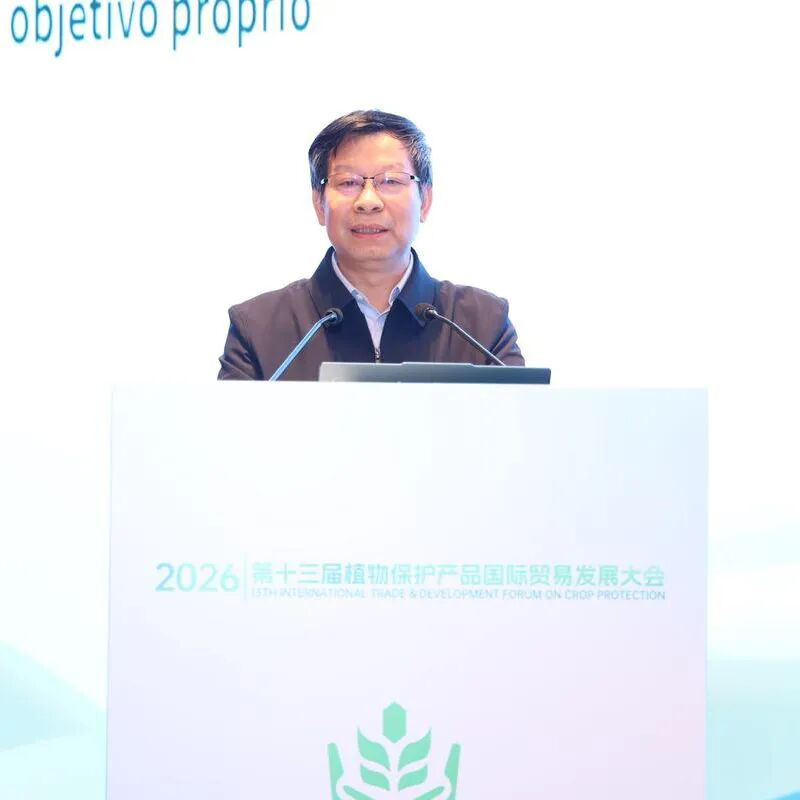
Yan Duanxiang
- President of China Crop Protection Industry Association
In May 2026, the Ministry of Agriculture and Rural Affairs issued Announcement No. 1020, making systematic revisions and adjustments to the Regulations on the Registration Administration of Pesticides for Overseas Use Only. This new policy has become a major focus for pesticide export enterprises. Zhao Keli gave a detailed interpretation of the registration policy for pesticides used only overseas and provided detailed answers to a number of questions raised by export enterprises.
Changes in Brazil’s pesticide management regulations have long attracted strong attention from the industry. José Costa, General Coordinator of Pesticides and Related Products at Brazil’s Ministry of Agriculture, Livestock and Food Supply, shared recent changes in Brazil’s pesticide regulations and the overall status of pesticide registration in recent years.
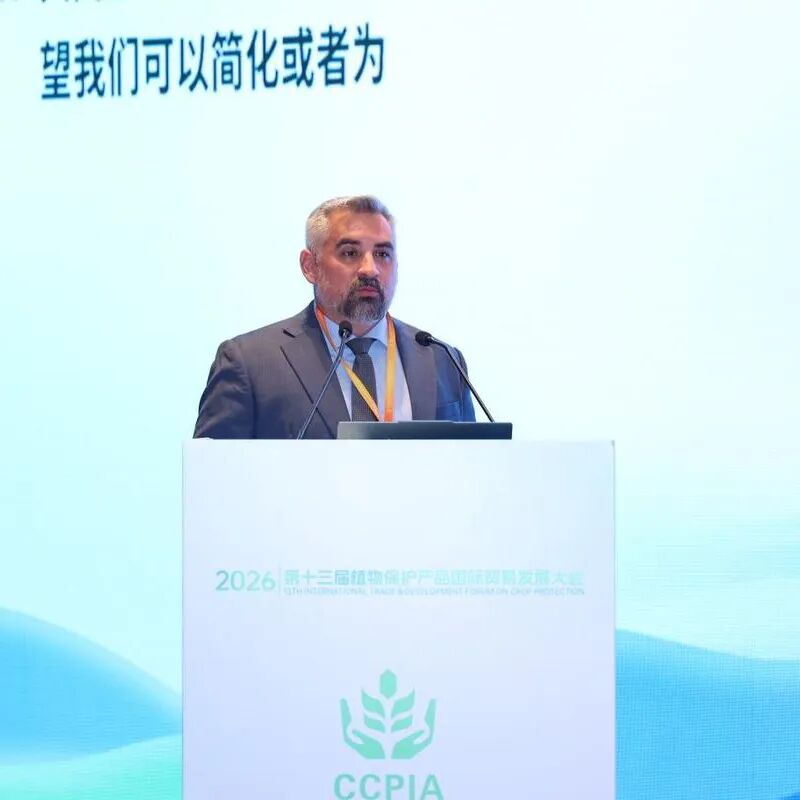
José Costa
- General Coordinator of Pesticides and Related Products, Ministry of Agriculture, Livestock and Supply of Brazil
The most important toxicological assessment involved in pesticide registration in Brazil is carried out by the Brazilian Health Regulatory Agency. Juliano Malty, Manager of the Equivalent Products Department at the Brazilian Health Regulatory Agency, shared insights into toxicological evaluation of equivalent technical materials and formulation products in Brazil’s health regulatory system. He introduced the three stages of Brazil’s risk assessment process, including comparison of chemical characteristics, quantitative parameters for determining equivalence, and full dossier review for equivalent new technical materials.
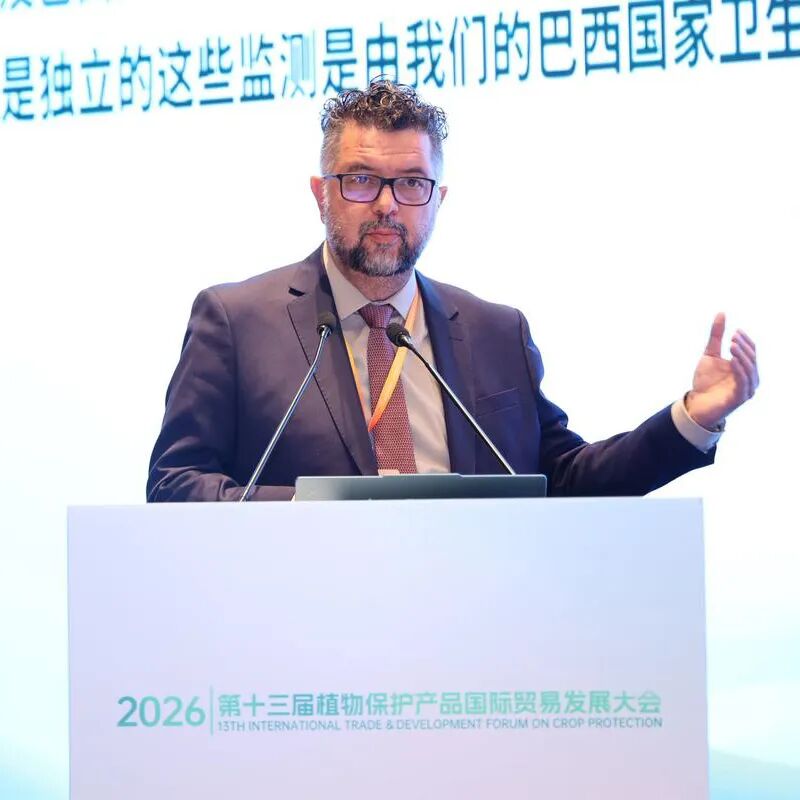
Juliano Malty
- Manager of the Equivalent Products Division, Brazilian Health Regulatory Agency
In recent years, pesticide formulation exports have increased year by year and have become a new growth driver for pesticide exports. Wu Xuemin, Professor at the College of Science of China Agricultural University, systematically introduced China’s pesticide formulation production innovation, agricultural drone applications, R&D innovation and development direction, giving import and export trade professionals and visiting Brazilian guests a deeper understanding of China’s pesticide formulation industry.
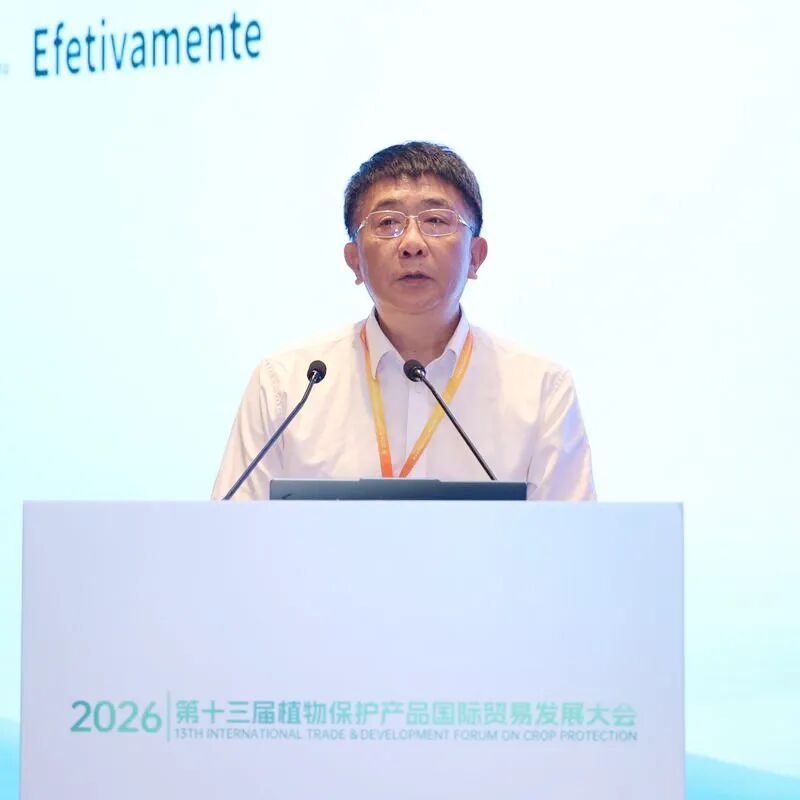
Wu Xuemin
- Professor, College of Science, China Agricultural University
Brazil’s unique climate conditions have led to severe pests and diseases, causing serious agricultural damage and economic losses. In his report, Maciel Silva from the Brazilian Confederation of Agriculture and Livestock introduced how Brazil applies innovative technologies and biological pesticides in integrated management of crop diseases, pests and weeds. Brazil needs to cooperate with China to further empower Brazilian farmers, especially in biotechnology innovation, and promote the sustainable development of Brazilian agriculture.
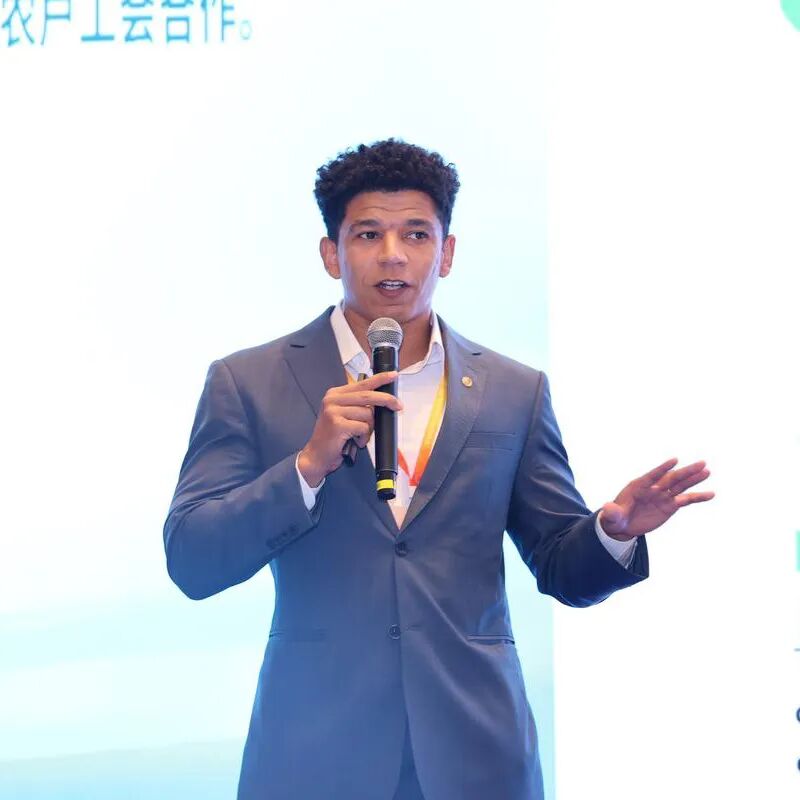
Maciel Silva
- Brazilian Confederation of Agriculture and Livestock
Before pesticide enterprises can complete product registration and officially launch products in the Brazilian market, they must also pass a special review process. This system aims to regulate market access and build an agrochemical market environment that strictly follows quality standards and maintains full-process compliance. Eliane Kay, President of the Brazilian Crop Protection Products Industry Alliance, shared the data and sample requirements under MAPA’s new announcement.
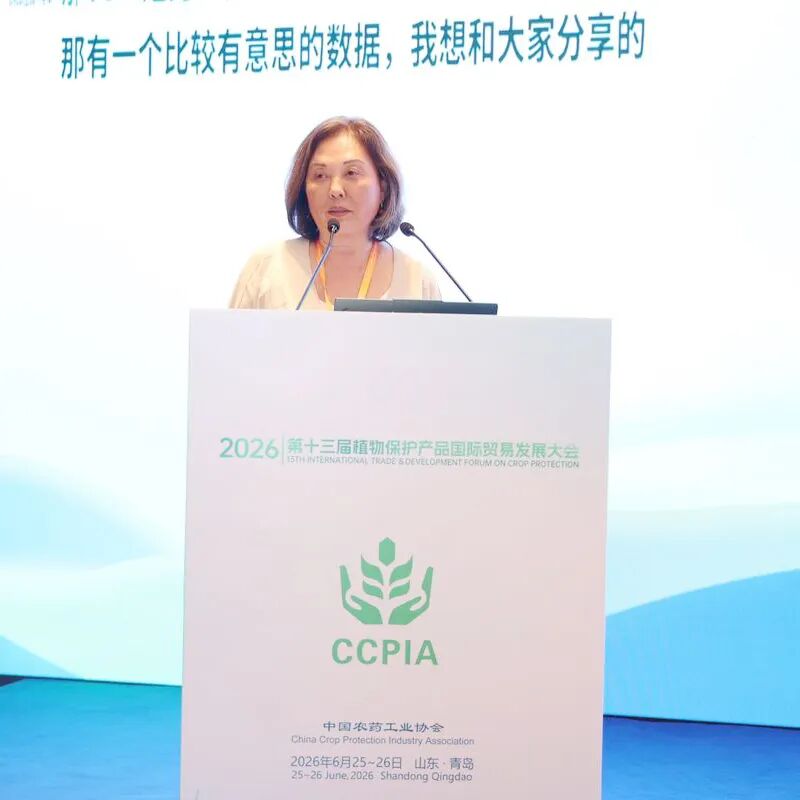
Eliane Kay
- President of Brazilian Crop Protection Products Industry Alliance
The El Niño phenomenon has a profound impact on global agricultural production. At present, 2026 El Niño climate signals have gradually emerged, and whether its intensity will reach a new historical record has drawn broad attention. Liu Chengtao, Senior Vice President of Global Business Operations at Chengdu Xinchaoyang Crop Science Co., Ltd., introduced the company’s work and practical exploration in supporting global sustainable agricultural development. He also explained a series of innovative biological pesticide technology solutions in detail, based on real application scenarios for improving stress resistance and quality in Brazilian corn and soybean production under extreme climate conditions.
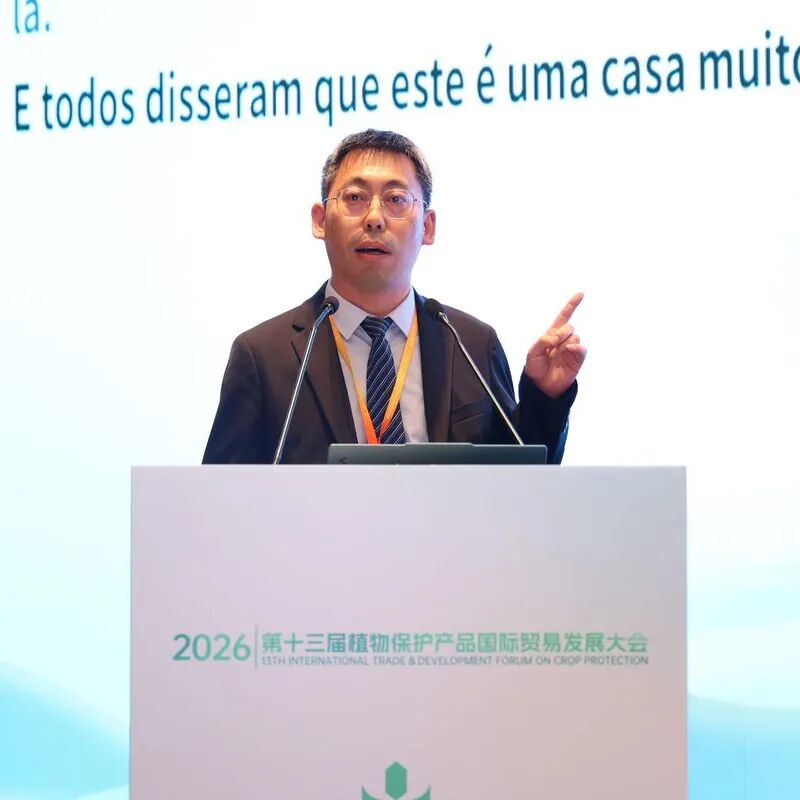
Liu Chengtao
- Senior Vice President of Global Business Operations, Chengdu Xinchaoyang Crop Science Co., Ltd.
Arthur Gomes from CropLife Brasil pointed out in his report that Brazil’s import supervision is centered on risk prevention and control. It strictly requires agrochemical products to comply with import quality standards and regulatory procedures, while cracking down heavily on counterfeit, substandard and illegal agricultural inputs. Continued deepening of bilateral cooperation and joint development of standardized quality control systems will become a key area for coordinated and sustained improvement between the Chinese and Brazilian industries.
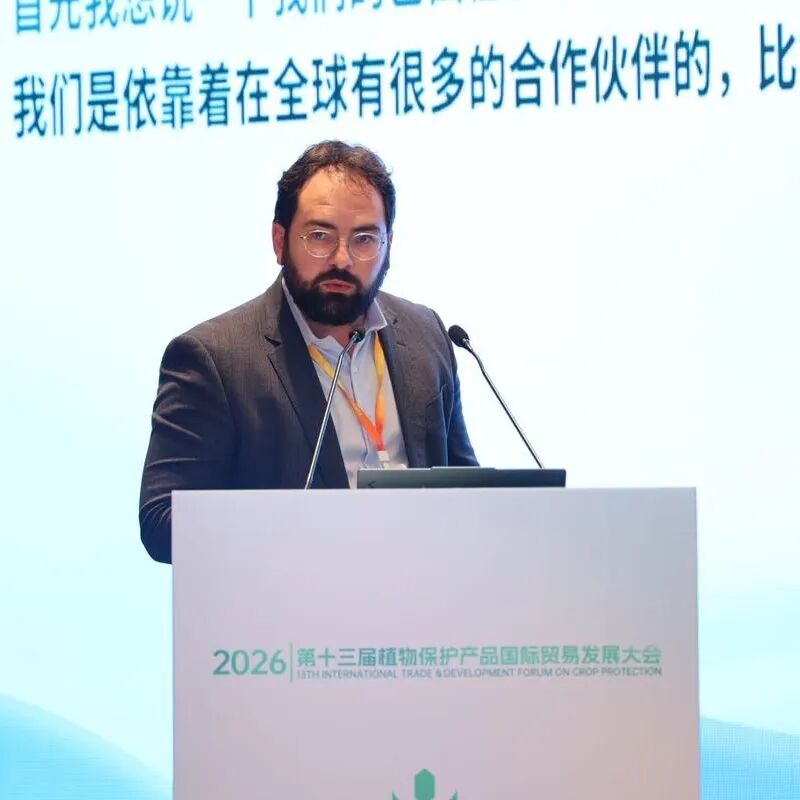
Arthur Gomes
- CropLife Brazil Association
Agriculture plays a vital role in Brazil’s national economy, and the country’s agrochemical market has long ranked among the largest in the world. Andrea Rodrigues, Senior Regulatory Affairs Manager at IHARA Brazil, shared insights around three core dimensions: the current development of Brazilian agriculture, the agrochemical market landscape, and exchange rate trends. These are all fundamental business factors of strong concern to pesticide export enterprises.
Every year, global agricultural economic losses caused by meteorological disasters approach USD 100 billion, accounting for 4% of global agricultural GDP. Meteorological disasters have become a major hidden threat to food security worldwide. Practice has shown that plant growth regulators are one of the effective technical tools for resisting such disasters and stabilizing agricultural production. Liu Yue, Director at Sichuan Guoguang Agrochemical Co., Ltd., introduced Guoguang’s methods and experience in responding to low-temperature chilling damage and drought, and pointed out that plant growth regulators have very strong market potential in Brazil.
The establishment of a full-chain traceability system for crop production is indispensable. Among these efforts, life-cycle traceability of agricultural inputs is particularly important, and control must be carried out throughout the process against three categories of standards: product quality, human health and safety, and ecological environmental protection. Letícia Silva from the Brazilian Institute for Regulation and Sustainable Development shared a report titled “Measures to Promote Quality Improvement and Coordinated Supervision after the Launch of Plant Protection Products in China and Brazil.”
Cao Bingwei, Deputy Director of the International Exchange and Service Division of the Institute for the Control of Agrochemicals, Ministry of Agriculture and Rural Affairs, gave a detailed analysis of the reasons behind the peaks and troughs in China’s pesticide exports from 2010 to 2020. Based on China’s pesticide export performance from January to May 2026, he predicted that China’s pesticide export volume this year is very likely to exceed that of 2025.
Different countries and regions vary significantly in agricultural planting structures, pest and disease occurrence characteristics, product demand standards, and registration management systems. Domestic pesticide enterprises expanding overseas must take into account both overseas market demand and regulatory compliance requirements in each country. Yang Yongzhen, International Consultant of the China Crop Protection Industry Association and former Secretary of FAO JMPR/JMPS, shared pesticide demand and pesticide product regulatory requirements in major countries around the world.
Guo Wei, Deputy Secretary-General of the China Crop Protection Industry Association, reviewed the export trends of pesticide enterprises over the past decade using detailed data. After 2020, the export scale of relevant enterprises increased significantly, and the development of industry participants accelerated. The export share of leading pesticide exporters accounted for more than half of the national total, showing a prominent trend of industry concentration.
After the conference, representatives attending the event said they had gained a great deal from the trip. Participants agreed that the detailed interpretation of the export-only pesticide policy will help promote high-quality pesticide exports and has important practical significance as well as long-term value. At the same time, the visit of the Brazilian delegation built a high-quality platform for cross-border industrial matchmaking, helping further strengthen friendship between the Chinese and Brazilian industries, deepen multidimensional exchanges in agricultural input trade and plant protection technology, and jointly explore the potential of bilateral pesticide trade cooperation.
The conference was hosted respectively by Yang Jianhai, Executive Vice President of the China Crop Protection Industry Association; Ma Shuai, Vice President and Secretary-General of the China Crop Protection Industry Association; and Guo Wei, Deputy Secretary-General of the China Crop Protection Industry Association.
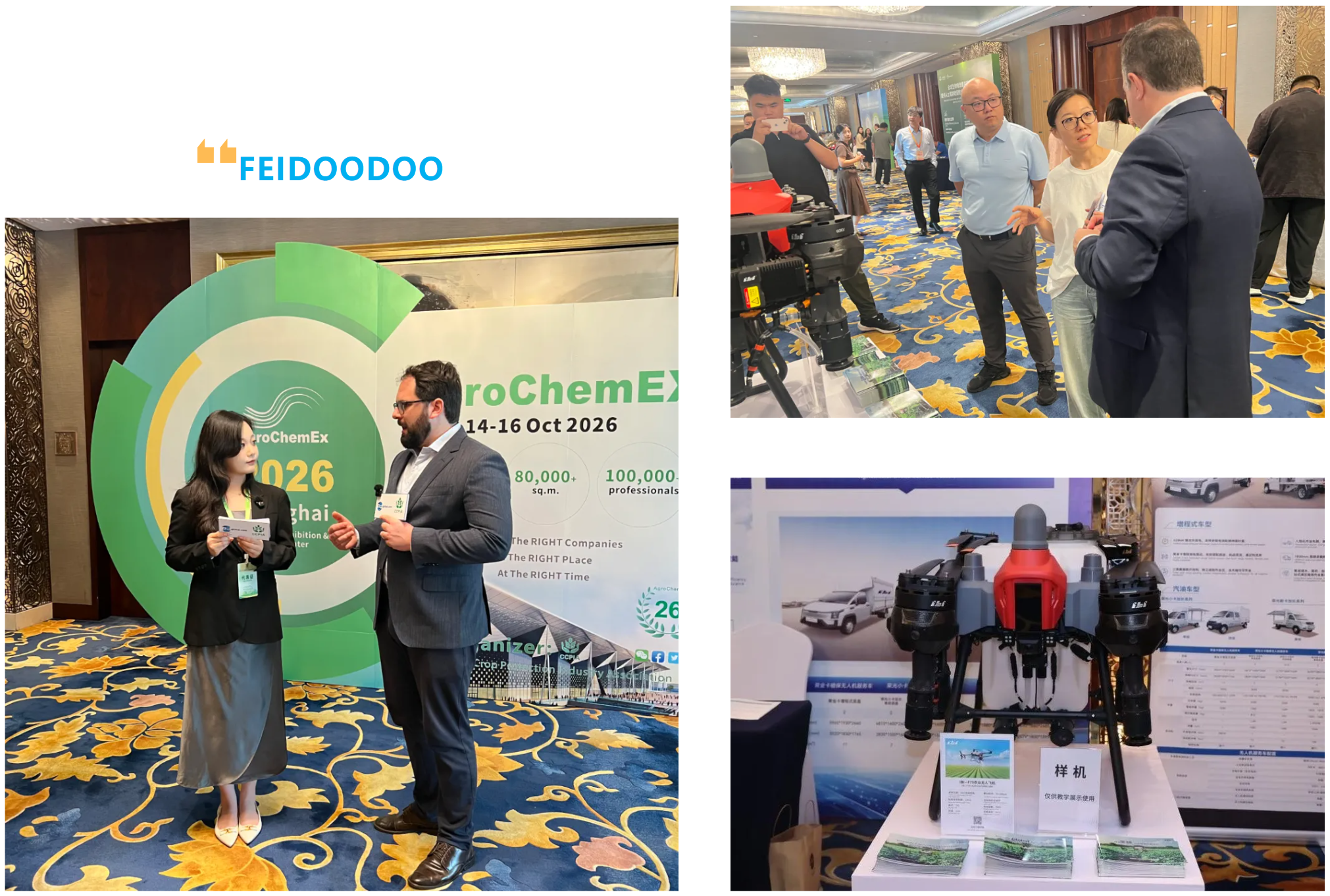
As a media support organization for the conference, Feidoodoo followed the event throughout the entire process. Through multidimensional real-time photo and text livestreaming, the team recorded the highlights of the conference in full and delivered its core messages and key moments at the earliest opportunity. The team also conducted a series of on-site interviews, engaging in dialogue with senior industry professionals, listening to voices from the front line of the industry, extracting cutting-edge development viewpoints, and producing high-value, multi-perspective in-depth industry reports.
The offline exhibition area was also presented in full. Feidoodoo made a strong appearance with IBI agricultural drones, showcasing new momentum for modern agricultural development through advanced intelligent technology. The display comprehensively demonstrated innovative application achievements of agricultural drones in intelligent crop protection, precision agricultural operations and other scenarios. Through practical demonstrations, technical explanations and advantage analysis, the team fully presented the core strengths of IBI agricultural drones and clearly explained smart agriculture implementation solutions and industrial innovation value, allowing guests to experience the broad development prospects of digital and intelligent modern agriculture.
With this,
the 13th International Trade Development Conference for Plant Protection Products
successfully concluded.
The industry gathered, ideas and technologies converged.
Digital agriculture integrated, scientific innovation empowered.
Together, new momentum for smart agriculture was forged.
See you again in 2027,
as we jointly embark on a new journey of global agricultural innovation.
Source: ACE International Agricultural Exhibition
-
IBI Group снова вошла в число 100 лучших частных предприятий Пекина в 2026 году, заняв 19-е место.6424
-
Выставка интеллектуальной сельскохозяйственной техники и оборудования WAFI 2026 открывается.5278
-
Свяжите глобальные цепочки поставок, объедините бизнес в Фэнтае: Грандиозное открытие Всемирного фестиваля цепочного бизнеса 99 в 2026 году.5890
-
Удобряя мир, давая цифровому сельскому хозяйству возможность взлететь | Серия тематических обменных встреч FDD успешно завершена, исследуя новые пути для трансграничного сотрудничества в области цифрового и интеллектуального сельского хозяйства9619
-
Укрепление глобальных связей через глубокое взаимодействие с отраслью | FDD участвует в выставке современных сельскохозяйственных технологий Китай-Латинская Америка 20268201