Blocker Mulch Film
3506
April 8, 2025, 10:00 AM
Руководство
Основные моменты
В статье подробно анализируются технические характеристики, химический состав и применение мульчирующих плёнок: состав полимерной основы (PE, EVA, биоразлагаемые системы), функциональные добавки (УФ-стабилизаторы, антиоксиданты, пигменты), оптические, механические и термические свойства различных типов плёнок (чёрные, прозрачные, серебристые, цветные), а также особенности монтажа, взаимодействия с почвой и интеграции в агропроизводство. Рассматриваются цепочки поставок сырья, распределения и переработки отходов в рамках круговой экономики.

1.Basic Performance Characteristics
1.1 Material Composition and Structure
-
Base Polymer Components
-
Polyethylene(PE): 70-95% of mulch films use LDPE or LLDPE as base material
-
EVA copolymers: 5-18% content, improves, flexibility and weatherability
-
Recycled materials: 15-40% PCR (post-consumer recycled) content in certain non-food applicatons
-
Bio-based PE: 2-5% in newer mulch films, derived from sugarcane ethanol
-
-
Additive System
-
Carbon black(black mulch): 2.0-3.5%, provides light blocking and UV protection
-
Colorants(colored mulch): 1.0-3.0% organic or inorganic pigments
-
UV stabilizers: 0.5-1.5% HALS and/or benzotriazole compounds
-
Antioxidants: 0.1-0.3% hindered phenols and phosphites
-
Anti-drip agents: 0.3-0.8% in silver reflective films
-
IR enhancers: 0.5-1.5% in heat-retaining mulch films
-
-
Multilayer Structures
-
Single-layer mulch: 60-65% market share, thickness 15-50μm
-
Co-extruded multilayer: 35-40% market share, typically 3-layer structure
-
Layer composition: outer layer(stabilizers + anti-aging)/ middle layer (base + recycled) / inner layer (special functions)
-
Layer thickness ratio: Three-layer films typically 20/60/20 or 15/70/15
-
Special structures: Dual-color mulch (black top/ white bottom) providing light blocking on top and reflection below
-
1.2 Physical Properties
-
Thickness Range
-
Standard Thickness:15-20μm (0.6-2.0mil)
-
Light mulch film: 15-20μm, single-season use
-
Medium mulch film: 25-35μm, standard applications
-
Heavy mulch film: 40-50μm, multi-season or harsh conditions
-
Ultra-thin biodegradable film: 8-15μm
-
Thickness tolerance: ±7% within same roll, ±10% between batches
-
-
Optical Properties
Film Type Visible Light Transmission Visible Light Reflection Infrared Blocking Light Diffusion Black 4-8% 85-95% - Transparent 85-92% 8-12% 10-20% 15-25% White 20-30% 60-75% 30-40% 80-90% Silver 10-15% 65-80% 60-80% 70-85% Colored (red/blue/yellow) 30-60% 20-40% 20-40% 40-60% -
Mechanical Properties
Property LDPE Mulch LLDPE Mulch Biodegradable Mulch Tensile Strength (MD/TD, MPa) 18-25/16-22 28-40/25-35 12-20/10-18 Elongation at Break (MD/TD, %) 250-450/300-550 500-700/600-800 200-400/250-450 Tear Resistance (MD/TD, N/mm) 20-40/40-80 50-100/100-200 15-30/25-50 Puncture Resistance (N) 5-12 12-25 3-9 Initial Stretch (%) 10-15 8-12 12-18
Note: MD=Machine Direction TD=Transverse Direction
-
Thermal Properties
-
Black Mulch:
-
Daytime soil warming: 3-7°C higher than bare soil
-
Night-time heat retention: 1-3°C higher than bare soil
-
Solar absorption: 90-95%
-
-
Transparent Mulch:
-
Daytime soil warming: 5-9°C higher than bare soil(greenhouse effect)
-
Night-time heat retention: 1-2°C higher than bare soil
-
Early maturation effect: 7-14 days advancement
-
-
Colored mulch temperature effects:
-
Red: +4-6°C
-
Blue: +2-4°C
-
Silver: +1-3°C
-
-
-
Aging and Durability
-
Stand service life: Black LDPE 4-6 months, LLDPE 6-9 months
-
UV degradation rate: unstabilized LDPE loses 10-15% tensile strength per month of exposure
-
Light transmission retention (transparent films): 85-90% after 3 months, 75-85% after 6 months
-
Environmental condition impact: lifespan reduced by 30-40% in 50°C high-temperature soil
-
Biodegradable film complete degradation:12-24 months in soil (depending on environmental conditions)
-
1.3 Functional Properties
-
Moisture Regulation Capability
-
Soil evaporation reduction: 70-95% (compared to bare soil)
-
Water retention gains: 180-350m³/ha water savings per season
-
Water vapor transmission rate(WVTR):15-25g/m²·day (standard PE film)
-
Condensation recovery:20-40 g/m²·day collected on the inner surface of transparent films
-
-
Temperature Regulation Function
Film Type Daily Average Temperature Increase Morning Temperature Rise Night Retention Daily Temperature Range Black +2-5°C +1-3°C +1-3°C -4-8°C Transparent +4-8°C +2-5°C +0.5-2°C -1-3°C Silver/White +1-3°C +0.5-2°C +0.5-1°C -3-6°C Colored (Average) +2-4°C +1-3°C +0.5-2°C -2-5°C Measurement Depth:10cm soil layer
Biological Control Functions
-
Weed suppression effectiveness: Black film > 95%, colored films 80-90%, transparent film
-
Soil-borne pathogen reduction: black film 30-50%, transparent film(solarization) 60-95%
-
Specific pest repellence:
-
Silver reflective film: reduces aphids by 60-80%, whiteflies by 50-70%
-
Blue film: reduces thrips by 40-60%
-
Yellow film: attracts certain insects(useful for monitoring)
-
-
Nematode control: Transparent film solarization efficiency 70-90%
-
Spectral Selectivity Functions
-
Red film: Increases red:far-red ratio (R:FR) to 1.2-1.5 (natural light 1.1)
-
Black film: Blocks 95-98% of photosynthetically active radiation (PAR) from reaching soil
-
Silver film: Reflects 55-75% of incident light, increasing PAR to lower canopy
-
Special spectral films: Selectively filter UV-B, enhance specific pigment synthesis
-
Yield impact: Red mulch increases yield 5-15% (strawberries, tomatoes), silver mulch 3-12% (most vegetables)
-
2.Chemical Properties and Formulations
2.1 Chemical Composition and Molecular Structure
-
Polyethylene(PE) Based Films
-
LDPE chemical Formula: -(CH₂-CH₂)n- with branched structure
-
LLDPE Chemical Formula:-(CH₂-CH₂)n- with controlled short-chain branching
-
Molecular Weight: Mw 100,000-300,000 g/mol
-
Density Range
-
LDPE: 0.915-0.925g/cm³
-
LLDPE: 0.918-0.928g/cm³
-
HDPE: 0.940-0.965 g/cm³
-
-
Crystallinity: LDEP 40-50%, LLDPE 30-45%, HDPE 60-80%
-
Branch Frequency: LDPE 15-30 branches/1000C, LLDPE 10-25 branches/1000c
-
-
EVA Copolymer Component:
-
Chemical Formula: -(CH₂-CH₂)x-[CH₂-CH(OCOCH₃)]y-
-
Vinyl Acetate Content: 5-18% in agricultural films
-
Functional Properties: increases flexibility, improves low-temperature performance
-
Crystallinity Range: 20-35% (decreases with increasing VA content)
-
Melting Point Range: 85-105°C (vs. 105-115°C for pure LDPE)
-
Polarity: Moderately polar due to acetate groups
-
-
Biodegradable polymer systems:
-
PBAT chemical formula: polybutylene adipate terephthalate, complex polyester structure
-
PLA Chemical Formula: [CH₃CH(CO₂H)]n
-
Starch-based blends: modified starch(C₆H₁₀O₅)n combined with polyesters
-
Molecular Weight Range: 50,000-200,000 g/mol
-
Crystallinity: PLA 10-40%, PBAT 20-35%, PBS 35-45%
-
Glass Transition Temperature: PLA 55-60°C, PBAT -30°C, PBS -35°C
-
2.2 Additive Chemical Systems
2.2a UV stabilizer Chemistry
-
HALS(Hindered Amine Light Stabilizers)
-
Chemical Structure: Based on 2,2,6,6-tetramethylpiperidine
-
Mode of Action: Nitroxyl radical formation trapping free radicals
-
Effective Range: 315-400nm (UV-A)
-
Migration Rate: 0.2-0.8% loss/month from surface
-
-
Benzotriazole UV Absorbers
-
Chemical Structure: 2-(2-hydroxyphenyl)-benzotriazole derivatives
-
Mode of Action: UV absorption and energy dissipation
-
Effective Range: 290-350nm (UV-B and partial UV-A)
-
Synergistic Effect: 1.5-2.5× effectiveness when combined with HALS
-
2.2b Antioxidant Chemistry
-
Primary Antioxidants
-
Chemical Types: Hindered phenols (BHT, Irganox, series)
-
Mechanism: Hydrogen donation to peroxy radicals
-
Structure-Activity: 2,6-di-tert-butyl phenolic structure most effective
-
Dosage Range: 0.05-0.2% in agricultural films
-
-
Secondary Antioxidants
-
Chemical types: Phosphite esters, thioethers
-
Mechanism: Hydroperoxide decomposition
-
Synergistic Ratio: 1:2 to 1:4 (primary:secondary) for optimal protection
-
Thermal Stability: Effective up to 280-300°C processing temperatures
-
2.2c Pigment and Colorant Chemistry
-
-
-
Carbon Black
-
Chemical Structure: Amorphous carbon, particle size 20-80nm
-
Surface Chemistry: 2-5% oxygen-containing functional groups
-
Loading Range: 2.0-3.5% in black mulch films
-
UV protection mechanism: Free radical scavenging, UV absorption
-
-
Color Pigments
-
Red: Iron oxide (Fe₂O₃) or organic azo compounds
-
Blue: Copper phthalocyanine derivatives
-
Yellow: Chrome yellow (PbCrO₄), organic diarylide yellows
-
Particle Size Range: 0.01-0.5 μm for optimal dispersion
-
Migration Resistance:
2.3 Surface Chemistry and Modifications
2.3a Corona Treatment Effects
-
Chemical Changes: Oxidation of surface polymers, introducing -OH, -COOH, -C=O groups
-
Surface Energy Increase: From 29-31mN/m to 38-42mN/m
-
Treatment Half-life: 2-4 weeks under standard storage conditions
-
Depth of Modification: 5-10nm from surface
-
Wettability: Contact angle reduction from 90-100° to 50-65°
2.3b Anti-fog Additives
-
Chemical Types: Non-ionic surfactants, glycerol esters, ethoxylated alcohols
-
Mechanism: Migration to surface, reducing water surface tension
-
Hydrophilic-Lipophilic Balance (HLB): 6-10 optimal for PE films
-
Migration Rate: 0.1-0.3 mg/m²·day at 25°C
-
Effectiveness Duration: 1-4 months depending on temperature and humidity
2.3c Chemical Interaction with Soil
-
Leaching Compounds:
-
Low molecular weight PE oligomers: 0.01-0.05% of film mass
-
Additive Migration: Antioxidants 0.1-0.3%, plasticizers 0.2-0.5% over 3months
-
Metal Content: Heavy metals
-
Chemical Resistance:
-
Fertilizer interaction:pH 4-9 resistant, concentrated NH₄NO₃ causes stress cracking
-
Pesticide Compatibility: Resistant to most water-based formulations
-
Oxidizing Agent Sensitivity: Accelerated degradation with peroxides permanganates
-
-
Surface adsorption Properties:
-
Soil particle Adhesion: 10-50g/m² depending on soil type
-
Microbial Biofilm Formation: begins within 7-14 days of soil contact
-
Hydrophobic Pollutant sorption:10-50× higher than soil for certain pesticides
-
-
-
-
-
-
3.Types and Classification
3.1 Classification by Optical Properties
-
Black Mulch Film(Market dominant, 55-65% share)
-
Applications: Weed Control, pest reduction, moderate soil warming
-
Light absorption: absorbs 90-95% of incident radiation, blocks light penetration
-
Heat Radiation: Absorbs heat during day, slowly releases at night
-
Special Variants: Micro-perforated black (gas/water/exchange), anti-drip black
-
Main Advantages: effective weed control, wide applicability, organic farming friendly
-
-
Transparent Mulch Film(15-20% share)
-
Applications: early spring cultivation, temperature-sensitive crops, soil solarization
-
Heat capture: 1.5-3°C higher than other colored films, creates "mini-greenhouse" effect
-
Light Transmission: Transmits 85-92% of PAR to soil
-
Weed issues: requires herbicides or pre-treatment
-
Special uses: Solar soil disinfection (40-60°C soil temperatures)
-
-
White/Silver Reflective Film (10-15% share)
-
Applications: Summer high-temperature regions, cooling-requiring crops, pest-sensitive crops
-
Light reflection: reflects 60-75% of visible light back to canopy
-
Temperature effect: 2-5°C cooler than black film (key summer advantage)
-
Pest Control: Repels 90%+ flying insects, reduces virus transmission 60-80%
-
Cost premium: 15-30% higher than standard black film
-
-
Colored Functional Films(5-10% share)
-
Red film: increases fruit yield, improves sweetness, promotes flowering in certain plants
-
Blue film: controls plant compactness, reduces stem internode distance, increases yield for some vegetables
-
Yellow film: Increases soil temperature, early maturation for specific crops, monitoring function
-
Brown Film: Similar to black film effects but with more moderate temperature regulation
-
Green Film: Balance between greenhouse effect and weed control, moderate temperature increase
-
-
Dual/multi-color films(2-5% share)
-
Black/white Dual Film: black top(weed control) white bottom (enhanced reflection)
-
Silver/black Dual Film: Silver top(reflection + pest repellent) black bottom (weed control)
-
Dual Film advantages: Combines functions of two colors, adaptable throughout growing season
-
Usage Areas: high-value crops and temperate to warm climates
-
Cost increment: 25-40% higher than single-color films
-
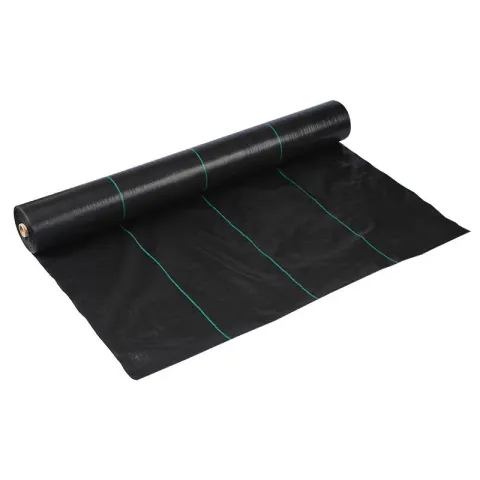
PP сплетенные мембраны PE грунтового покрытия сетки сорняков мат рулон анти трава сорняков управления ткань блокатор мульчирующая пленка
$ 0.1
/Square Meter
MOQ: 5000Square Meter
Product Model:
Профиль поставщика
SHOUGUANG ZEHUI AGRICULTURAL SCIENCE AND TECHNOLOGY CO.,LTD
Создание: 2015-04-03
Размер компании: 50
Оптимальная цена
4.Application and Usage Methods
4.1 Installation and Laying Techniques
4.1a Manual Installation
-
Usage Rate: 25-35% of global mulch films installed manually
-
Labor Requirement: 0.4-0.8 person-days/hectare
-
Application scenarios: Small farms, irregular plots, developing countries
-
Fixation Methods: Soil pressing edges, plastic pins(2-4 per square meter)
-
Edge Burial Depth: 10-15cm to ensure stability
4.1b Mechanized Installation
-
Equipment types: single-row (1.0-1.2m), multi-row (up to 4 rows simultaneously)
-
Working efficiency: 0.5-2.0 hectares/hour
-
Tension Efficiency: 0.5-2.0 Hectares/hour
-
Fixation systems: simultaneous trenching and soil covering, compacting edges
-
Advanced Features: synchronous drip tape installation, mulch perforation
4.1c Special Installation Methods
-
Double-layer installation: Tunnel effect, air insulation between 2 layers
-
Ridge + Furrow Coverage: comprehensive weed control, improved moisture utilization
-
Solarization installation: Tight soil contact, sealed edges
-
Floating Cover Method: slightly suspended over crops, frost protection
-
Dome installation: support-assisted, increases volume space
4.2 Installation Performance Factors
4.2a Soil Preparation requirements
-
Optimal soil moisture: 50-75% of field capacity
-
Surface preparation: clod size
-
Bed formation: 10-20cm height, 3-5% crown for drainage
-
Pre-installation treatments:
-
Base fertilization: complete before mulching
-
Residue removal:
-
Soil firming: light rolling recommended
-
Irrigation systems: install drip tape simultaneously with mulch
4.2b Weather Condition Impacts
-
Wind limitations:
-
Temperature range: 10-30°C optimal (film becomes brittle 35°C)
-
Humidity effects: 40-70% relative humidity optimal
-
Rainfall Considerations:
-
Pre-installation: allow 24-48 hours after heavy rain
-
Post-installation: increased puncture risk within 48 hours
-
-
Seasonal timing: install 1-2 weeks before planting in cold regions
4.2c Machinery and Equipment performance
-
-
-
Tractor requirements
-
Power: 25-45 HP for single-row, 60-90 HP for multi-row
-
Speed: 3-6 km/h optimal operation rate
-
Hydraulic capabilities: minimum 2 sets of remotes
-
-
-
-
Installation quality metrics
-
Edge burial: 90-95% continuous coverage
-
Tension uniformity:
-
Surface contact: > 90% soil-to-film contact
-
Stretching ratio: 102-105% of original width
-
Laying precision
-
Row alignment tolerance: ±2-3cm
-
Film Centering: ±5cm from bed center
-
5.Upstream-Downstream Industry Relationships
5.1 Upstream Raw Material Supply Chain
5.1a Polymer Resin Supply
-
Agricultural Mulch PE Consumption: Approximately 3.4-4.0 million tons/year globally
-
Resin Price Fluctuations: Strongly correlated with crude oil, 20-40% annual variation
-
Regional Differences: Middle East Lowest cost, Asia largest capacity
-
Bio-based PE Premium: 30-70% higher than conventional PE
-
Key Suppliers: ExxonMobil, SABIC, Total, Sinopec, Dow
5.1b Additive Supply Chain
-
Mulch Film Specific additives market: $450-550 million
-
Additive Cost Proportion: 5-15% of total cost(depending on functionality)
-
Innovation Driven: 80% of performance improvements come from additive technology
-
Key Suppliers: BASF, Clariant, Addivant, Songwon, Ampace
-
Regional Characteristics: Europe High-performance, Asia low-cost, Americas balanced.
5.2 Downstream Industry Connections
5.2a Mulch Film Distribution Channels
-
Agricultural cooperatives: 25-35% market share
-
Agricultural input retailers: 30-40% market share
-
Direct manufacturer sales: 10-15% (large farms)
-
Online platforms: 5-10% (rapidly growing)
-
Government programs: 5-15% (especially in developing markets)
-
Channel margins:
-
Wholesale: 8-12%
-
Retail: 15-25%
-
Specialized products: 25-40%
-
5.2b Integration with other agricultural systems
-
Irrigation system integration
-
Drip irrigation: 70-80% of mulched area uses drip
-
Compatibility issues: special fittings requred for perforation
-
-
Fertilizer system synergies:
-
Fertigation compatibility: enhanced nutrient efficiency 20-30%
-
Controlled-release fertilizers: 15-25% improved efficiency under mulch
-
Reduced leaching: 30-50% less nitrogen loss
-
-
Crop protection integration
-
Reduced herbicide usage: 60-80% reduction
-
Altered fungicide programs: lower disease pressure, 20-40% reduction
-
Integrated pest management: specialized for mulched conditions
-
5.2c Recycling and waste management industry
-
Collection Infrastructure:
-
Specialized agricultural plastic collectors: operating in 30+ countries
-
Collection rate: 15-55% depending on region(Europe highest)
-
Cost of collection:$80-150/ton
-
-
Recycling technologies:
-
Conventional mechanical recycling: requires
-
Advanced washing systems: can process material with 15-25% soil
-
Chemical recycling: emerging for heavily contaminated films
-
Recycled content applications:
-
Agricultural products: irrigation pipes, plant pots, non-food contact films
-
Construction products: lumber alternatives, outdoor furniture
-
Industrial applications: packaging, automotive components
-
-
Circular economy initiatives:
-
Manufacturer take-back programs: increasing by 25-30% annually
-
Recycled content goals: 20-30% by 2025(industry average)
-
Advanced tracking: RFID and blockchain verification systems
-
-
Больше новостей о закупках
76741
July 4, 2025
72949
July 10, 2025
70944
July 10, 2025
63857
July 4, 2025
60965
July 10, 2025