Imidacloprid
3147
June 23, 2025, 10:11 AM
Руководство
Основные моменты
Имидаклоприд — системный неоникотиноидный инсектицид с высокой эффективностью против сосущих вредителей (тля, белокрылка, трипсы). Обладает низкой летучестью, умеренной растворимостью в воде и слабой способностью к биоаккумуляции (log Kow ≈ 0,57). Синтезируется из производных пиридина и имидазолидина. Применяется в виде обработки семян, почвенной обработки и листовых опрыскиваний. Несмотря на широкий спектр действия и длительную защиту, его использование ограничено в ЕС и других регионах из-за токсичности для пчёл и развития резистентности у вредителей.
1.Chemical and Physical Properties
1.1 Chemical Identity
-
Common Name: Imidacloprid
-
Chemical Name (IUPAC): 1-(6-chloro-3-pyridylmethyl)-N-nitroimidazolidin-2-ylideneamine
-
CAS Registry Number: 138261-41-3 (for imidacloprid); 105827-78-9 (for an earlier CAS number sometimes cited)
-
Chemical Class: Neonicotinoid insecticide (specifically a chloronicotinyl insecticide)
-
Molecular Formula: C₉H₁₀ClN₅O₂
-
Molecular Weight: 255.66 g/mol
1.2 Key Physical Properties
-
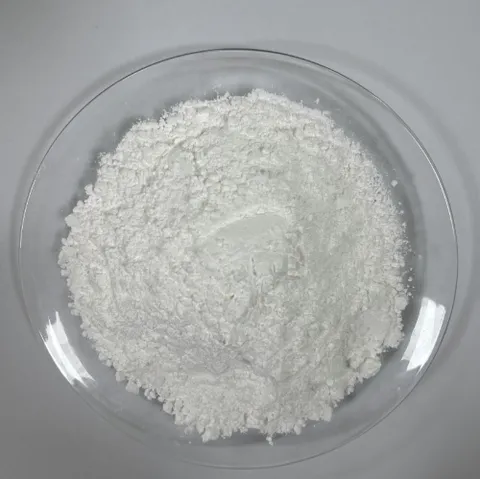
Appearance: Colorless crystals or white to off-white crystalline powder.
-
Odour: Weak, characteristic odour, or odourless.
-
Melting Point: Approximately 144°C (decomposes slightly before melting).
-
Boiling Point: Decomposes before boiling at atmospheric pressure.
-
Vapour Pressure: Very low (e.g., ~4 x 10⁻⁷ Pa or ~3 x 10⁻⁹ mmHg at 20°C), indicating it is non-volatile.
-
Density: Approximately 1.54 g/cm³ at 20°C.
-
Solubility:
-
Water: Moderately soluble; 0.61 g/L (610 ppm) at 20°C. Solubility is pH-dependent.
-
Organic Solvents: Soluble in dichloromethane; slightly soluble in methanol, ethanol, isopropanol, acetone, toluene; very slightly soluble in n-hexane.
-
-
Log K_ow (Octanol-Water Partition Coefficient): Typically around 0.57, indicating low potential for bioaccumulation in fatty tissues but high systemic movement in plants.
1.3 Key Chemical Properties
-
Stability:
-
Stable to hydrolysis at pH 5-11.
-
Relatively stable to photolysis in water, but can degrade on soil surfaces exposed to light.
-
Stable under normal storage conditions.
-
-
Corrosivity: Non-corrosive.
2.Production Technologies
2.1 Synthesis Overview
The synthesis of imidacloprid is a multi-step chemical process. A common route involves:
-
Synthesis of 6-chloronicotinaldehyde or 6-chloropyridine-3-carboxaldehyde: This is a key intermediate. It can be prepared from picoline derivatives or other pyridine precursors through chlorination and oxidation steps.
-
Synthesis of N-nitroimidazolidine-2-ylideneamine or its precursor: This part involves the reaction of ethylenediamine with a cyanogen halide (like cyanogen bromide) or carbon disulfide, followed by reactions to form the imidazolidine ring and introduce the nitroimine group.
-
Condensation Reaction: The 6-chloropyridylmethylamine (derived from 6-chloronicotinaldehyde by reductive amination or by reacting 6-chloro-3-(chloromethyl)pyridine with an amine source) is reacted with the N-nitroimidazolidine-2-ylideneamine derivative (e.g., 2-nitroiminoimidazolidine) to form imidacloprid.
-
A common intermediate is 6-chloro-3-(chloromethyl)pyridine, which is reacted with N-(2-aminoethyl)-N'-nitroguanidine or similar compounds.
-
2.2 Key Raw Materials
-
Pyridine derivatives (e.g., 3-picoline)
-
Chlorinating agents (e.g., chlorine gas, sulfuryl chloride)
-
Ethylenediamine
-
Cyanogen halides (e.g., cyanogen bromide) or carbon disulfide
-
Nitrating agents
-
Various catalysts and solvents
2.3 Formulation
Imidacloprid is formulated in various ways for different application methods:
-
Soluble Concentrate (SL)
-
Seed Treatment (FS - Flowable Concentrate for Seed Treatment; WS - Wettable Powder for Slurry Seed Treatment): Very common use.
-
Wettable Powder (WP)
-
Water Dispersible Granules (WG or WDG)
-
Granules (GR): For soil application.
-
Tablets (TB)
-
Suspension Concentrate (SC)
-
Also found in ready-to-use (RTU) formulations for consumer products, baits, and combination products with other pesticides or fertilizers.
3.Applications
3.1 Mode of Action
-
Imidacloprid is a systemic insecticide with translaminar activity (can move from one side of a leaf to the other).
-
It belongs to the Group 4A insecticides according to the Insecticide Resistance Action Committee (IRAC).
-
Mechanism: It acts as an agonist of the nicotinic acetylcholine receptor (nAChR) in the insect central nervous system. It binds to these receptors, causing a nerve impulse that cannot be shut off, leading to overstimulation, paralysis, and death of the insect.
-
It is much more active on insect nAChRs than on mammalian nAChRs, which contributes to its selective toxicity.
-
Uptake: Absorbed by roots (when soil-applied or used as seed treatment) and foliage, and translocated acropetally (upwards) within the plant xylem.
3.2 Crops
Imidacloprid is a systemic insecticide with translaminar activity (can move from one side of a leaf to the other).
-
It belongs to the Group 4A insecticides according to the Insecticide Resistance Action Committee (IRAC).
-
Mechanism: It acts as an agonist of the nicotinic acetylcholine receptor (nAChR) in the insect central nervous system. It binds to these receptors, causing a nerve impulse that cannot be shut off, leading to overstimulation, paralysis, and death of the insect.
-
It is much more active on insect nAChRs than on mammalian nAChRs, which contributes to its selective toxicity.
-
Uptake: Absorbed by roots (when soil-applied or used as seed treatment) and foliage, and translocated acropetally (upwards) within the plant xylem.
3.3 Pests Controlled
Imidacloprid is effective against a broad spectrum of sucking insects and some chewing insects:
-
Aphids (various species)
-
Whiteflies (e.g., Bemisia tabaci, Trialeurodes vaporariorum)
-
Thrips (various species)
-
Leafhoppers and Planthoppers
-
Psyllids (e.g., Asian citrus psyllid)
-
Some Beetles: Colorado potato beetle, flea beetles, Japanese beetle (adults).
-
Soil Insects: Wireworms, grubs (when soil-applied or as seed treatment).
-
Termites (for structural protection)
-
Fleas (on pets)
-
Limited activity against: Spider mites, nematodes, and most caterpillars (Lepidoptera).
4.Market Analysis
4.1 Global Market Overview
-
Imidacloprid was once the world's best-selling insecticide and a flagship product of the neonicotinoid class.
-
Its market share has been significantly impacted by regulatory restrictions related to bee toxicity, particularly in Europe and North America.
-
However, it remains a widely used insecticide globally, especially in regions with less stringent regulations or for specific uses where alternatives are limited.
-
Major original patent holder was Bayer CropScience (product names like Gaucho, Merit, Confidor, Admire). Many generic versions are now available.
4.2 Key Market Dynamics
-
Drivers (Historically and in some current markets):
-
Broad-spectrum control of sucking pests.
-
Systemic activity and long-lasting protection (especially via seed treatment and soil application).
-
Versatility in application methods.
-
Relatively low use rates for some applications.
-
-
Restraints/Challenges:
-
Bee Toxicity and Pollinator Concerns: The primary factor driving market decline and regulatory action.
-
Regulatory Bans and Restrictions: Significant impact in the EU, Canada, and some parts of the USA.
-
Insecticide Resistance: Resistance to imidacloprid and other neonicotinoids has been documented in several key pest species (e.g., Colorado potato beetle, some aphid species, whiteflies).
-
Public Perception: Negative public perception of neonicotinoids due to their impact on pollinators.
-
Competition: From newer insecticide classes, biological control agents, and integrated pest management (IPM) strategies. There is a market shift towards insecticides with better environmental profiles
-
5.Upstream and Downstream Linkages
5.1 Upstream Linkages (Inputs for production)
-
Basic Petrochemicals: As precursors for pyridine rings and other organic intermediates.
-
Chlorinating Agents.
-
Ethylenediamine, Cyanogen Halides/Carbon Disulfide: For the imidazolidine moiety.
-
The chemical industry provides these basic building blocks
5.2 Downstream Linkages (outputs and consumers)
-
Agrochemical Formulators: Purchase technical grade imidacloprid to produce end-use products.
-
Seed Companies: Incorporate imidacloprid into seed treatments.
-
Pest Control Operators (PCOs): For termite control and other structural pest management.
-
Veterinary Medicine Companies: For flea control products.
-
Distributors and Retailers: Supply formulated products to farmers and consumers.
-
Farmers and Growers: The primary end-users in agriculture and horticulture.
-
Homeowners: For garden pest control and pet care products.
Больше новостей о закупках
76741
July 4, 2025
72949
July 10, 2025
70944
July 10, 2025
63855
July 4, 2025
60965
July 10, 2025